Are Home Arcade Machines Worth Getting?
What a home arcade machine costs to buy and to own, how much it really gets played, what the cheaper alternatives are, and a simple test for whether one is worth it for your home.

Highlights
- Quality home arcade units priced $1,500–$4,000 deliver years of reliable, maintenance-free entertainment
- They serve as distinctive home accents that streaming services and mobile gaming simply cannot replicate
- Value extends beyond gameplay: they're social catalysts that facilitate genuine multi-generational connection
- Families who host regularly and empty nesters seeking connection find the strongest return on investment
Home is where the heart is, and what better way to raise your spirits and make your home even better than with your very own arcade machine?
To the question at the front of the article, the honest answer is yes, for most households. It depends on how often the machine will get played: will that be by more than one person, most weeks, in a room where it can stay set up? It is usually not worth it for one person's occasional nostalgia, because there are much cheaper ways to play the same games. Price, size and the kind of machine all follow from that.
This guide goes through what a home arcade machine costs to buy and to own in 2026, how much it tends to get played, how it compares with the alternatives, and the cases where it is not worth the money.
The four-question test
Answer these before you shop:
| Question | Good sign: probably worth it | Warning sign |
|---|---|---|
| Who will play it? | The family and guests use it, so the machine earns its place. | Mainly one enthusiast, whose machine competes with every other hobby in the house. |
| How often? | Most weeks, over several years. That is where a home machine beats the alternatives. | A few evenings a year. |
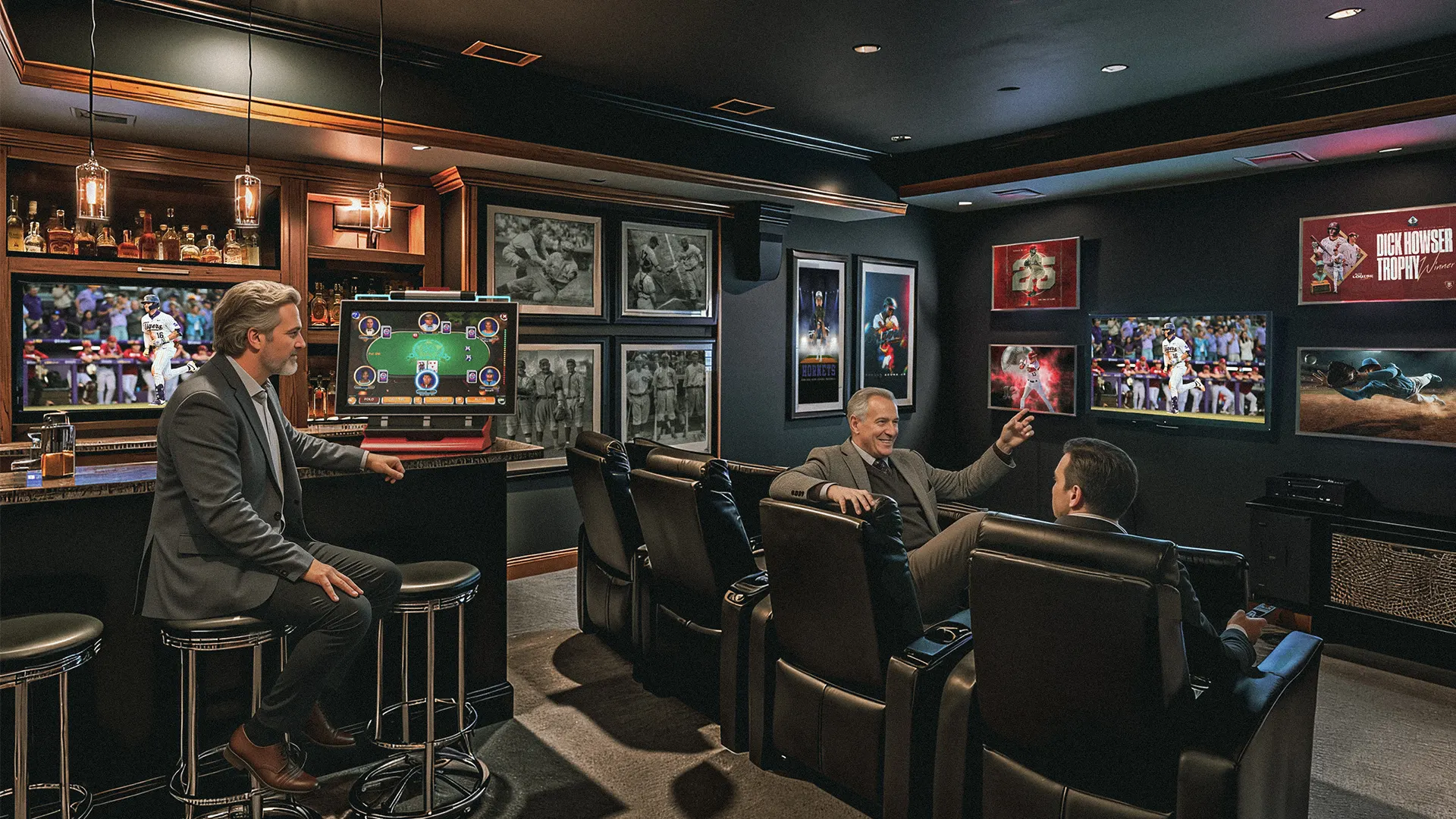
| Where will it stand? | In a room people already spend time in: a basement bar, a den, a kitchen counter. | In the garage or a spare room, where it tends to be forgotten. Garages can also damage a machine: little insulation and wild temperature swings in temperate climates. |
| What can you spend, all in? | The budget covers the price, delivery, a riser or stools, and whatever the machine needs to keep working. | The machine alone already stretches the budget. |
If the answers are "several of us", "most weeks", "a room we use" and a budget that covers the kind of machine you want, a home arcade is worth getting. If most answers point the other way, one of the alternatives below will serve you better.
What a home arcade machine costs to buy in 2026
Prices as makers listed them in September 2026:
- Licensed minis and small bartops: $130 to $250 for an Arcade1Up Countercade or Counter Series or an Evercade Alpha, with a few licensed games and a 7- or 8-inch screen.
- Full-size replicas: from $499.99 for an Arcade1Up full-size cabinet and $599 to $699.99 for its taller Supreme models, flat-packed, with a handful of licensed games. The AtGames Legends Ultimate, with 300 licensed games built in, lists at $899.99 but was out of stock.
- Prebuilt bartops from small makers: about $800 to $1,800, assembled, with full-size controls and a large library of content.
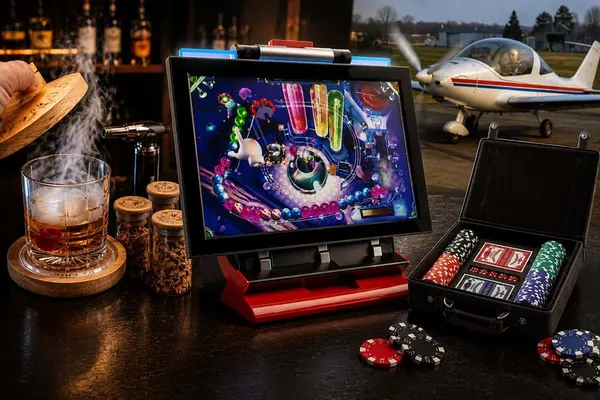
- Touchscreen countertops: about $300 to $2,700 for a used Megatouch, with no manufacturer behind it since 2014, or $3,990 for a new JVL ECHO HD3 Home Edition, with a 22-inch touchscreen and 149 built-in games that will keep you coming back for more over the long run.
- Do it yourself: about $350 in parts for a Raspberry Pi bartop, plus the evenings it takes to build. It may also require coding or complex setups to get everything to work right.
- Purchasing an original machine: it doesn't get more authentic than this, but the price can be anywhere from "free" to thousands of dollars. It depends on the game and its condition, and a free game that doesn't work may need hundreds of dollars in repairs, depending on the issue. Some older games from the '80s or '90s also had no Free Play setting, so you have to insert coins or rig a button to make it work.
The bartop arcade buying guide goes through each kind and what to check before you buy.
What it costs to own
The price is most of the cost, but not all of it:
- Electricity. Less than most people expect. An Arcade1Up cabinet runs from a 36-watt adapter, a Raspberry Pi 5 with a 22-inch monitor draws roughly 25 to 45 watts, and a 1980s CRT upright about 100. At the July 2026 US average of 18.31 cents per kWh and two hours of play a day, that is under 50 cents a month for an LCD machine and about $1.10 for a CRT. The exception is a CRT left on around the clock, at about $13 a month.
- Repairs. Joystick machines wear their controls, but the parts are cheap: a Sanwa button lists at about $3 and a Sanwa joystick at about $25, though this depends on where you buy, as some retailers charge more. LCD backlights are typically rated for 30,000 to 50,000 hours before they fade to half brightness, which is decades at two hours a day. The expensive failures are the screen and the main board.
- Warranty. This is where machines differ most. Arcade1Up gives 90 days, or 180 if you register the machine; AtGames gives 90 days and sells extensions of one to three years for $150 to $350; Evercade gives 12 months on its consoles and Unico 12 months; Creative Arcades gives three years on parts and labor. The ECHO HD3 carries a one-year all-inclusive manufacturer warranty, and each unit is powered on and tested before it ships, from boot and the full touchscreen surface to sound, game loading and the swivel base.
- Games. A built-in library costs nothing more after purchase, and one that runs offline, as on the JVL ECHO HD3, keeps working without an account or a network. A library tied to an online store depends on the company behind it: iiRcade owners lost access to their purchases when it shut its servers in June 2023, and in June 2026 AtGames told buyers of Zen Studios content that they keep it "for as long as AtGames maintains its servers and platform services."
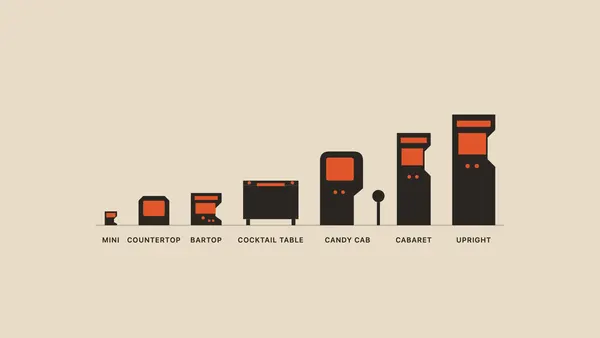
- Space. A full-size Arcade1Up stands about 5 feet tall on a footprint of roughly 19 by 22 inches and weighs about 68 pounds; the AtGames Legends Ultimate is 66 inches tall and about 80 pounds; an original 1980s upright is 5 to 6 feet tall and around 250 pounds. A bartop or countertop sits on a counter you already have. The guide to arcade cabinet types gives the sizes of every format.
Do home arcade machines hold their value?
Generally speaking no, though it depends on the kind of machine:
- Mass-market replicas sell used for around or below what they cost new. Arcade1Up cabinets from 2018 to 2020, which launched at $299 to $399, now ask $115 to $450 on eBay, and tested used Countercades ask $45 to $150.
- Discontinued models in demand can go the other way for a while: the AtGames Legends Ultimate launched at $599 in 2019, and used ones ask $750 to $1,600 while the current version is out of stock.
- Original 1980s uprights are collector items, and collectors report prices climbing steadily since the late 1990s, especially for restored machines. This does depend on the game, however, as obscure games tend to be affordable since they see little demand.
These are asking prices, not completed sales, so treat them as a ceiling.
Buy a home arcade to play it, not as an investment.
How much will it actually get played?
We found no published figures on this, but reviewers mostly agree on the risks. A Tom's Guide roundup of Arcade1Up criticism noted that buyers are "stuck with only the games pre-installed on them." A Digital Trends writer who used an iiRcade on and off for two years ended up with a large cabinet and little use for it once the company shut down. In forum threads, owners split between machines that sit in the garage and machines their kids play every week.
What keeps a home arcade machine in use:
- A shared room. A machine people walk past gets played; one behind a closed door does not.
- Games more than one person wants. A library only its buyer cares about ends up with one player.
- Short rounds. Games that take a few minutes fit around dinner, drinks and conversation.
- Two players at once. Head-to-head play turns the machine into something to do together rather than something to watch.
- Nothing to set up. Every login, update or cable to plug in is a reason to leave it for another day.
The control type matters here too. A joystick machine suits action games and the people who grew up with them; a touchscreen suits cards, puzzles and trivia that guests of any age will try. The comparison of touchscreen and traditional arcade machines goes through that choice.
Home arcade machine vs the alternatives
| Option | What it costs | Suits |
|---|---|---|
| Arcade collection on a console you own | About $8 to $10 per game on current consoles | One player who wants specific classics on the TV |
| A night at a large arcade chain | Roughly $1 per game | Occasional play with friends, with no space needed at home |
| DIY Raspberry Pi bartop | About $350 in parts | Someone who enjoys the build as much as the games |
| Home arcade machine | $130 to about $4,000 | Several players, most weeks, a room it can stay in |
At about a dollar a game, every $100 spent on a machine is roughly 100 games at an arcade. A machine that gets played often passes that point quickly; one that comes out a few times a year never does.
When a home arcade machine is not worth it
- You would play a few times a year. A night out costs less and needs no space.
- You want one or two specific games. A console collection gets you them for a fraction of the price.
- There is no room where it can stay set up. A machine that has to be moved out to be played rarely is.
- You expect it to hold its value. Most replicas do not.
- It has to go through narrow doors or down stairs. Measure the route as well as the spot, especially for a full-size upright.
If you decide to buy
- Measure the space and the route in. Counter height and depth for a bartop, floor space and doorways for an upright.
- Make sure you have electrical capacity. While many of the options discussed will not draw a lot of power, an older machine can pull a few amps.
- Ask where the games come from. Licensed, the maker's own, emulated, or bought from an online store, and what happens if the store closes.
- Check the warranty and who repairs it. Length, what it covers, and whether parts will exist in five years.
- Pick the controls for the people who will play. A joystick for action games, a touchscreen for mixed groups.
Frequently asked questions
Are home arcade machines worth the money?
They are when several people will play most weeks and the machine has a room to stay in. For occasional play, a console collection at about $8 a game or a night at an arcade costs far less.
How much electricity does a home arcade machine use?
Very little. A modern LCD machine draws roughly 25 to 45 watts, under 50 cents a month at two hours a day and 2026 US prices. A 1980s CRT upright uses about two to three times as much.
Do home arcade machines hold their value?
Mass-market replicas mostly do not: asking prices for used Arcade1Up cabinets run $115 to $450, against $299 to $399 at launch. Restored 1980s originals hold value better, but buy a home machine to play, not to invest.
How long does a home arcade machine last?
Usually longer than its warranty. LCD backlights are rated for 30,000 to 50,000 hours, decades at two hours a day. What ends a machine is more often a failed board or a maker that no longer supports it.
Is Arcade1Up worth it?
For a fan of the specific licensed games on a cabinet, often yes: full-size models start at $499.99. The trade-offs are a fixed library, flat-pack assembly and a 90-day warranty, or 180 days if registered.
How does the JVL ECHO HD3 stand up against these options?
With 149 built-in games that work whether or not it is connected to the Internet, a strong warranty, low power draw, and multiplayer games, an ECHO truly does give you a solid bang for the buck.
Sources
41 sources- Arcade1Up, Full-size cabinets (prices as listed September 2026)
- Arcade1Up, Countercades (prices as listed September 2026)
- Arcade1Up, Warranty information
Show 38 moreShow less
- AtGames, Legends Ultimate CE-HD (price, dimensions, weight)
- AtGames, Warranty
- Evercade, Warranty
- Unico, Warranty policy
- Creative Arcades, 2P Mini 19" LCD (price and warranty)
- Gameroom Solutions, Bartop Deluxe Arcade Cabinet Plug and Play
- Monster Arcades, 2 Player Bartop Arcade System
- Tech Insider, How to build a bartop arcade cabinet in 2026 (parts costs)
- Arcade Heroes, Megatouch Ceases Development/Production Operations, 7 January 2014
- JVL, The Best Megatouch Alternative in 2026 (used Megatouch prices, September 2026)
- Time Extension, Review: Evercade Alpha, November 2024
- U.S. Energy Information Administration, Electric Power Monthly, Table 5.3 (residential price, July 2026)
- Replacement 12 V 3 A power adapter for Arcade1Up cabinets (retail listing)
- Dell, SE2225H monitor datasheet (power consumption)
- Raspberry Pi Tips, Raspberry Pi power consumption, 2026
- KLOV/VAPS forums, How much electricity do cabinets use (measured CRT uprights)
- Dell, Monitor usage guidelines (LCD backlight life)
- Samsung Insights, The truth about LED lifespan, May 2022
- Focus Attack, Sanwa OBSF-30 pushbutton
- Focus Attack, Sanwa JLF-TP-8YT joystick
- LaptopMag, Arcade1Up Class of '81 Deluxe review (dimensions and weight), February 2024
- Vintage Arcade Gal, arcade cabinet sizes and weights
- Vintage Arcade Gal, The rising cost of collecting arcade games
- ComicBook.com, Arcade1Up home arcade cabinets announced, July 2018
- PicClick, used Arcade1Up listings on eBay (September 2026)
- PicClick, used Countercade listings on eBay (September 2026)
- Wikipedia, AtGames Legends Ultimate (2019 launch price)
- PicClick, AtGames Legends Ultimate listings on eBay (September 2026)
- Tom's Guide, Should I buy an Arcade1Up arcade machine?, November 2019
- Digital Trends, iiRcade ownership after the shutdown, July 2024
- ResetEra, Arcade1Up owners discussion, December 2025 (anecdotal)
- PlayStation Store, Arcade Archives title (price per game)
- Bargain Believer, Dave & Buster's chip prices and game costs, December 2023
- Arcade Heroes, Newsbytes: iiRcade Bankruptcy, June 2023
- National Law Review, AtGames and Zen Studios Joint Statement, 15 June 2026
- JVL, Bartop Arcade Machine for Home: Buying Guide 2026
- JVL, Upright, Bartop, Countertop or Tabletop? Arcade Cabinet Types Explained
- JVL, ECHO HD3 product page (specifications, editions, list prices)