Is the arcade worth it in 2026?
Arcades in 2026 are great for social occasions, but home machines often offer better long-term value. Compare real costs to find the right choice.

Highlights
- Barcades and family entertainment centers offer social value but poor economics for regular gamers
- Home arcade ownership achieves better ROI than venue visits for frequent players within 18–24 months
- A $4,000 home investment equals 40–50 venue visits at typical admission and per-game pricing
- Value varies by use case: occasional social outings have different economics than regular gaming
Arcades are worth it in 2026 for specific audiences seeking social experiences and nostalgia, though value depends entirely on venue type and personal preferences. Barcade concepts combining craft beverages with gaming provide unique social environments for adults 25-45. Family entertainment centers offer diverse attractions beyond pure gaming. However, traditional coin-operated arcades struggle to justify costs compared to home entertainment options. Home arcade ownership increasingly provides superior value for regular players through unlimited access without recurring venue fees.
The worth calculation differs dramatically between occasional social outings and regular entertainment needs. Visiting venues occasionally for atmosphere and socializing offers different value than attempting to use public arcades as primary gaming sources.
2026 arcade value by context:
Social outings with friends: Good value for atmosphere and experience
Family entertainment: Reasonable value for diverse all-ages activities
Regular gaming: Poor value compared to home ownership
Special events and dates: Good value as unique experience
Nostalgic experiences: High personal value despite objective costs
Skill competitions: Good value for competitive gaming community
Premium arcade machines for home provide superior economics for regular players. A $4,000 investment delivers unlimited entertainment equivalent to 40-50 arcade venue visits, achieving payback within 18-24 months for active users.
How do arcade costs compare to home entertainment?
Arcade venue visits cost $20-$80 per person per outing including games, food, and beverages, making them expensive compared to home entertainment options. A family of four spending $150 per arcade visit twice monthly faces $3,600 annual costs. In contrast, streaming services cost $15-$20 monthly, gaming consoles require $300-$500 initial investment, and premium home arcade systems at $3,000-$4,000 provide unlimited access after one-time purchase.
Cost comparisons favor home entertainment for regular users while occasional venue visits remain reasonable for social variety and special occasions.
Annual entertainment cost comparison:
Arcade venues (monthly visits): $2,400-$4,800 annually
Streaming services (Netflix, Disney+): $180-$300 annually
Gaming console with games: $400-$800 annually
Premium home arcade system: $3,000-$4,000 one-time, then minimal
Movie theaters (monthly visits): $1,200-$2,400 annually
Barcade venues (monthly): $1,800-$3,600 annually
Home arcade systems achieve cost parity within 12-24 months for households visiting venues regularly. The calculation improves dramatically for families with multiple children or social entertainers hosting gatherings. Beyond direct costs, home ownership eliminates transportation expenses, parking fees, and time spent traveling to venues.
What makes modern arcades different from 1980s-1990s venues?
Modern arcades differ from classic venues through diversified revenue models, adult-focused concepts, and experience emphasis over pure gaming. 1980s-1990s arcades generated 80-90% revenue from coin-operated games targeting teenagers. Contemporary successful venues derive 60-70% revenue from food and alcohol sales targeting adults 25-50. Classic arcades offered purely gaming experiences, while modern concepts integrate dining, drinking, private events, and Instagram-worthy environments. Game selection shifted from latest releases to nostalgic classics combined with premium attractions like VR experiences.
The transformation reflects market realities where home gaming eliminated arcades' technological advantages. Survival required repositioning as social destinations rather than gaming-focused venues.
Key differences between eras:
Revenue sources: Gaming-driven versus food and beverage-driven
Target demographics: Teenagers versus adults 25-50
Venue atmosphere: Gaming focus versus social experience emphasis
Game selection: Latest releases versus nostalgic classics
Business model: Game revenue versus hospitality revenue
Location strategy: Malls and urban entertainment districts then and now
Social media importance: None versus critical for modern marketing
The evolution explains home arcade machines growing popularity. Consumers recognize venues no longer offer superior gaming technology but rather social atmosphere. Many prefer recreating authentic arcade experiences privately, controlling environment, game selection, and access without commercial venue limitations.
Are arcade venues sustainable long-term?
Arcade venue sustainability in 2026 requires hybrid business models diversifying beyond pure gaming revenue. Traditional coin-operated game rooms face continued decline as home entertainment improves and younger generations lack arcade nostalgia. Successful sustainable models include barcades emphasizing alcohol sales, family entertainment centers offering diverse attractions, and event venues using arcades as atmosphere rather than primary revenue. Pure gaming-focused venues struggle outside high-traffic tourist destinations.
Long-term sustainability demands adapting to markets where consumers access superior gaming at home. Venues must offer experiences justifying travel and premium pricing through social atmosphere, unique attractions, or convenience for special occasions.
Sustainable versus struggling arcade models:
Sustainable: Barcades with craft beverage emphasis and 21+ crowds
Sustainable: Family entertainment centers with bowling, dining, attractions
Sustainable: Tourist destination arcades with high foot traffic
Sustainable: Premium experience venues with VR and unique offerings
Struggling: Traditional coin-operated game rooms without differentiation
Struggling: Mall arcades competing with home entertainment
Struggling: Venues targeting teenagers without adult revenue streams
Market trends favor home arcade ownership growth over public venue expansion. Consumers increasingly invest in permanent private entertainment spaces rather than visiting commercial venues. The shift doesn't eliminate public arcades but limits sustainable business models to specific niches emphasizing social experiences unavailable at home.
Frequently asked questions
Are arcades still worth visiting in 2026?
Yes, for the right reasons. Barcades and family entertainment centers deliver social experiences that home gaming cannot match — group competition, live atmosphere, food and drink. But for regular gamers who visit 2+ times per month, the math frequently favors home arcade ownership over recurring venue costs.
How much does an average arcade visit cost in 2026?
A typical barcade visit runs $25–$50 per person including game play, food, and drinks. Family entertainment centers (Dave & Busters, etc.) average $30–$60 per person depending on package. A family of four at an FEC easily spends $150–$250 in a single visit.
When does owning a home arcade pay back versus visiting venues?
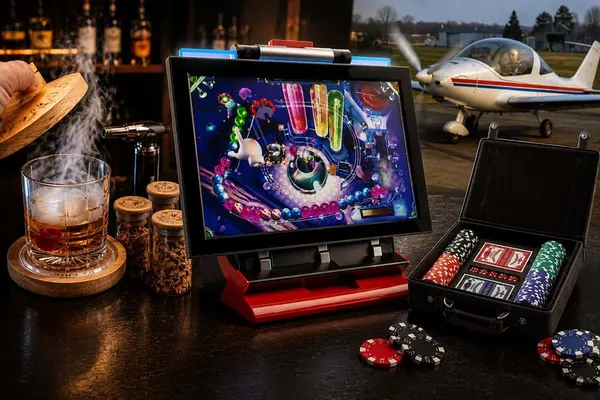
A $4,000 home arcade like the JVL ECHO HD3 equals roughly 40–50 venue visits for a family of four at typical pricing. For households that already visit arcades or FECs regularly, the breakeven point typically lands at 18–24 months. After that, every game played at home is essentially free.
Are home arcade machines as fun as commercial arcades?
For frequent play, yes — and often more so. A home arcade is available any time, requires no travel, and offers private group play with whoever you invite. It cannot replicate the crowded barcade atmosphere on a Saturday night, but for weekly family play it consistently delivers more enjoyment per dollar.
Who should not buy a home arcade machine?
Buyers who only play arcades occasionally — once or twice a year — will see a poor return on a $3,000–$4,000 home purchase. Visiting an FEC for a birthday or special occasion makes more sense economically. Home ownership pays off for regular, frequent play and households that value the cross-generational social aspect.