Is buying vintage arcade video game machines a good investment?
Rare vintage arcade cabinets can appreciate 3–7% yearly, but most are risky. Here's when buying vintage makes financial sense — and when it doesn't.

Highlights
- Rare classics like Donkey Kong and Pac-Man in excellent condition appreciate 3–7% annually
- Most arcade machines are poor investments — common titles hold flat or declining value over time
- Market liquidity is very limited: finding a qualified buyer can take months, unlike stocks or real estate
- Storage, maintenance, and restoration costs frequently erase any financial appreciation gains
Buying vintage arcade machines is a good investment for specific sought-after titles but risky for common games. Rare classics like original Donkey Kong, Pac-Man, and Galaga cabinets in excellent condition appreciate 3-7% annually, sometimes significantly more for pristine examples. A 1981 Donkey Kong worth $2,000 in 2010 might fetch $3,500-$5,000 in 2026. However, common titles like generic multi-game cabinets or poorly maintained machines lose value. Investment viability depends on rarity, condition, original components, working status, and storage costs. Most buyers should view vintage arcades as entertainment purchases rather than financial investments.
The collector market remains niche with limited liquidity. Unlike stocks or real estate, selling arcade cabinets requires finding specialized buyers, often taking months. Storage, maintenance, and restoration costs reduce financial returns.
Investment considerations for vintage arcades:
Rare sought-after titles: 3-7% annual appreciation potential
Common games: Flat or declining value over time
Condition critical: Original parts, working status, cabinet quality
Storage costs: Climate control, space requirements reduce returns
Market liquidity: Limited buyers, slow sales process
Maintenance needs: Ongoing repairs, part replacement expenses
Restoration costs: Can exceed appreciation for neglected machines
Collectors passionate about arcade history may justify purchases regardless of financial returns. However, modern premium systems provide superior entertainment value without maintenance concerns or space requirements of vintage equipment.
Which vintage arcade games appreciate most?
Vintage arcade games that appreciate most include Nintendo classics, rare vector graphics games, and limited production titles. Original Donkey Kong cabinets consistently increase 4-6% annually with pristine examples commanding $6,000-$10,000. Pac-Man and Ms. Pac-Man maintain steady value growth. Vector graphics games like Asteroids Deluxe and Tempest appreciate due to unique display technology and nostalgia. Limited production titles including Dragon's Lair (laserdisc), Discs of Tron, and certain pinball machines show strong appreciation. Fighting game classics like Street Fighter II gain value as competitive gaming culture grows.
Appreciation requires original condition with authentic components. Converted or heavily modified machines lose collector value dramatically. Complete working order, original artwork, and proper restoration enhance investment potential.
High-appreciation arcade categories:
Nintendo golden era titles: Donkey Kong, Mario Bros., Popeye
Early Namco classics: Pac-Man, Galaga, Dig Dug (original cocktail tables)
Vector graphics games: Asteroids, Tempest, Star Wars
Rare limited production: Dragon's Lair, Discs of Tron
Fighting game landmarks: Street Fighter II, Mortal Kombat
Pinball machines: Specific high-demand tables from 1970s-1990s
Market dynamics favor rare games in excellent condition. Common titles even in good shape show minimal appreciation. Serious collectors research production numbers, original specifications, and market trends before purchasing.
What are the downsides of owning vintage arcade machines?
Downsides of owning vintage arcade machines include extensive maintenance requirements, large space needs, limited game selection per cabinet, and technical obsolescence. Machines aged 30-40 years require frequent repairs as components fail. CRT monitors, power supplies, and circuit boards degrade, often needing expensive specialized repair services. Machines weigh 200-400 pounds and occupy 20-25 square feet each. Each cabinet typically contains only one game, requiring multiple machines for variety. Finding replacement parts becomes increasingly difficult as technology ages.
Ownership requires technical skills or expensive professional maintenance. Casual buyers expecting plug-and-play experiences face frustration when machines malfunction.
Vintage ownership challenges:
Maintenance: Frequent repairs, aging component failures
Technical expertise: Required for troubleshooting and repairs
Space requirements: 20-25 sq ft per cabinet, 200-400 pound weight
Limited game selection: Single game per machine typically
Part availability: Decreasing supply of 30-40 year old components
Power consumption: CRT monitors using 200-400 watts hourly
Restoration costs: Can reach $1,000-$3,000 for neglected machines
Transportation difficulty: Size and weight complicate moving
These challenges explain growing preference for modern systems combining vintage game libraries with contemporary reliability, compact designs, and zero maintenance requirements.
How does vintage arcade investment compare to modern systems?
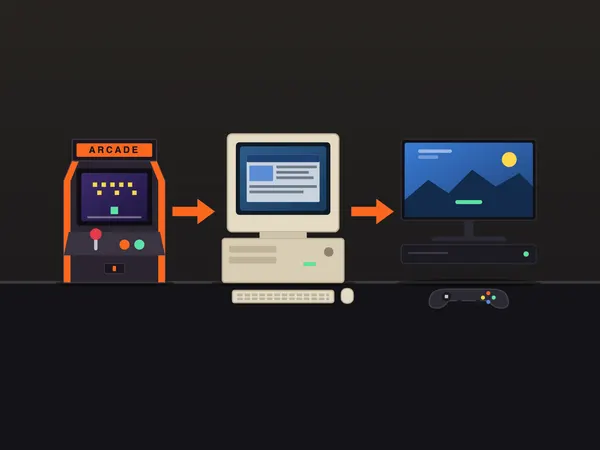
Vintage arcade investment provides potential appreciation but significant overhead, while modern systems offer superior entertainment value without maintenance concerns. A $3,000 vintage Donkey Kong might appreciate to $3,500 over 5 years, yielding 3% annual returns before subtracting storage and repair costs. Meanwhile, a $4,000 modern premium system provides 149 games with zero maintenance, occupying minimal space and consuming less electricity. Modern systems deliver unlimited entertainment value immediately rather than requiring financial return waiting periods.
The comparison reveals different value propositions. Vintage machines suit collectors prioritizing authenticity and investment potential. Modern systems serve those seeking practical entertainment solutions.
Value comparison analysis:
Initial cost: Similar $3,000-$4,000 range for quality units
Appreciation potential: Vintage 2-5% annually, modern depreciation
Game selection: Vintage single game, modern 100-150 games
Maintenance: Vintage extensive, modern minimal
Reliability: Vintage frequent issues, modern consistent operation
Space requirements: Vintage 20-25 sq ft, modern 6-8 sq ft
Entertainment value: Modern superior for regular use
Most households prioritize entertainment over investment returns. Modern systems provide immediate enjoyment without vintage collecting's complexities. The best financial "return" comes from entertainment hours delivered rather than potential resale appreciation.
Frequently asked questions
Do vintage arcade machines actually increase in value over time?
Some do, most do not. Rare classics in excellent original condition — original Pac-Man cabinets, Donkey Kong, Asteroids — can appreciate 3–7% annually. The vast majority of arcade machines hold flat or decline in value because supply still exceeds collector demand. Restoration costs frequently erase any paper gains.
How much does a vintage arcade machine cost?
Common 1980s and 1990s arcade machines range from $500 to $2,500 depending on condition. Rare collector titles in excellent condition can exceed $5,000, and museum-quality cabinets of iconic games occasionally sell for $10,000 or more. Most machines fall in the lower range.
What are the hidden costs of owning a vintage arcade machine?
Beyond the purchase price, expect storage (vintage cabinets need climate control), maintenance (CRT monitors, capacitors, and joysticks all fail), restoration (replacement art and parts are increasingly rare), and shipping (a single full-size cabinet can cost $300–$800 to ship). These costs commonly run $1,000–$3,000 over a 5-year holding period.
How easy is it to resell a vintage arcade machine?
Resale liquidity is very limited. Unlike stocks or real estate, finding a qualified buyer for an arcade cabinet can take weeks or months, even at fair market prices. Specialized collector forums, auction houses, and arcade shows are the main channels — local listings rarely produce serious offers.
Is a modern arcade machine a better choice than a vintage one?
For most buyers, yes. Modern multi-game machines like the JVL ECHO HD3 deliver 149 titles, a manufacturer warranty, and zero maintenance worries for roughly the same investment as a single restored vintage cabinet. The vintage path makes sense only if collecting and the hobby of restoration itself are the goal — not entertainment value or financial return.